Stanford ML Group, led by Andrew Ng, works on important problems in areas such as healthcare and climate change, using AI. Last year they released a knee MRI dataset consisting
Introduction Image classification is a key task in Computer Vision. In an image classification task, the input is an image, and the output is a class label (e.g. “cat”, “dog”,
Let’s play rock, paper scissors. You think of your move and I’ll make mine below this line in 1…2…and 3. I choose ROCK. Well? …who won. It doesn’t matter cause
In a previous post, we covered the concept of fully convolutional neural networks (FCN) in PyTorch, where we showed how we could solve the classification task using the input image
In the previous post, we learned how to classify arbitrarily sized images and visualized the response map of the network. In Figure 1, notice that the head of the camel
In this post, we will learn how to perform image classification on arbitrary sized images without using the computationally expensive sliding window approach. This post is written for people who
Hi! This post is part of our PyTorch series. In the previous post, Pytorch Tutorial for beginners, we discussed PyTorch, it’s strengths and why you should learn it. We also
Last year, Google released a publicly available dataset called Open Images V4 which contains 15.4M annotated bounding boxes for over 600 object categories. It has 1.9M images and is largest
In this post, we will compare the performance of various Deep Learning inference frameworks on a few computer vision tasks on the CPU. Surprisingly, with one exception, the OpenCV port
Training deep learning models is known to be a time consuming and technically involved task. But if you want to create Deep Learning models for Apple devices, it is super
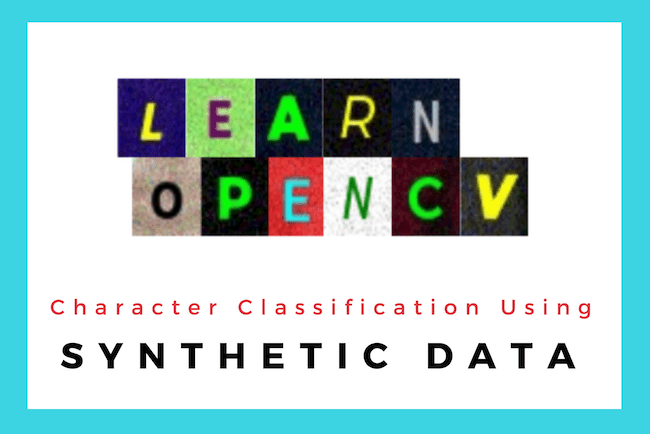
This summer I am doing an internship at Big Vision LLC under the guidance of Dr. Satya Mallick. In this post, I will describe the problem I was asked to
Billionaire investor and entrepreneur Peter Thiel’s favorite contrarian questions is What important truth do very few people agree with you on? If you had asked this question to Prof. Geoffrey