

PyTorch
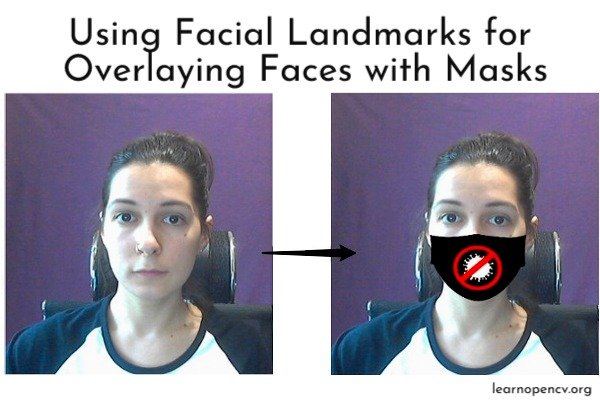
Have you ever wondered how Instagram masks are fitting so perfectly on your face? Would you like to know how you can try to implement something similar by yourself? This
The foreground is the part of a view or picture, that is nearest to you when you look at it (Oxford dictionary). We, humans, are usually good at distinguishing foreground
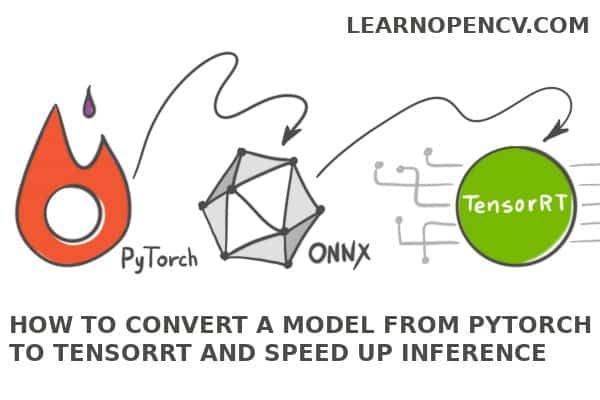
The life of a machine learning engineer consists of long stretches of frustration and a few moments of joy! First, struggle to get your model to produce good results on
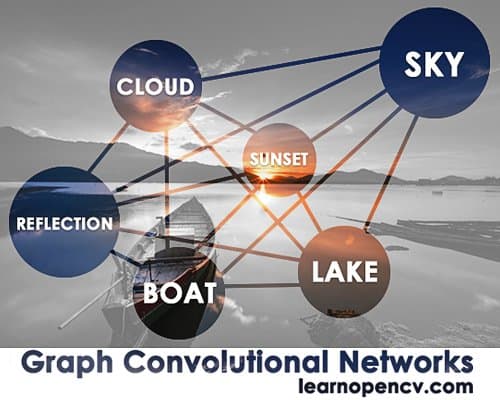
In an earlier post, we covered the problem of Multi Label Image Classification (MLIC) for Image Tagging. Recall that MLIC is an image classification task but unlike multi-class image classification
When approaching a problem using Machine Learning or Deep Learning, researchers often face a necessity of model tuning because the chosen method usually depends on various hyperparameters and used data.
This is a a gentle introduction to federated learning — a technique that makes machine learning more secure by training on decentralized data. We will also cover a real-life example
Imagine, one day you have an amazing idea for your machine learning project. You write down all the details on a piece of paper- the model architecture, the optimizer, the
In the previous post, we learned how to apply a fixed number of tags to images. Let’s now switch to this broader task and see how we can tackle it.
In Machine Learning, we always want to get insights into data: like getting familiar with the training samples or better understanding the label distribution. To do that, we visualize the
Back in 2012, a neural network won the ImageNet Large Scale Visual Recognition challenge for the first time. With that Alex Krizhevsky, Ilya Sutskever and Geoffrey Hinton revolutionized the area
In the previous post, we learned how to classify arbitrarily sized images and visualized the response map of the network. In Figure 1, notice that the head of the camel
In this post, we will learn how to perform image classification on arbitrary sized images without using the computationally expensive sliding window approach. This post is written for people who