Image classification is used to solve several Computer Vision problems; right from medical diagnoses, to surveillance systems, on to monitoring agricultural farms. There are innumerable possibilities to explore using Image
In the previous post, we’ve learned how to work with OpenCV Java API with the example of a PyTorch convolutional neural network, integrated into the Java pipeline. Now we are going
OpenCV library is widely used due to its extensive coverage of the computer vision tasks, and availability to involve it in various projects, including deep learning. Usually, OpenCV is used
In this post, we will learn how to convert a PyTorch model to TensorFlow. If you are new to Deep Learning you may be overwhelmed by which framework to use.
Stanford ML Group, led by Andrew Ng, works on important problems in areas such as healthcare and climate change, using AI. Last year they released a knee MRI dataset consisting
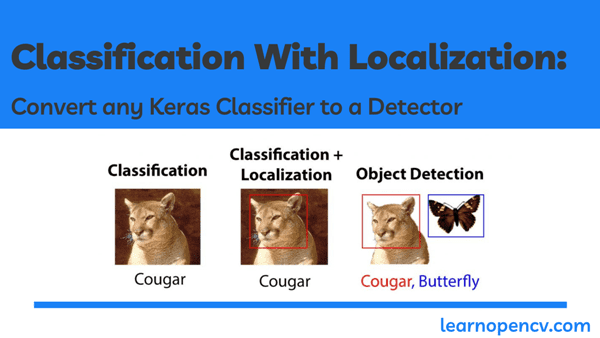
Introduction Image classification is a key task in Computer Vision. In an image classification task, the input is an image, and the output is a class label (e.g. “cat”, “dog”,
A picture is worth a thousand words! As computer vision and machine learning experts, we could not agree more. Human intuition is the most powerful way of making sense out
Let’s play rock, paper scissors. You think of your move and I’ll make mine below this line in 1…2…and 3. I choose ROCK. Well? …who won. It doesn’t matter cause
In our recent post about receptive field computation, we examined the concept of receptive fields using PyTorch. We learned receptive field is the proper tool to understand what the network
In a previous post, we covered the concept of fully convolutional neural networks (FCN) in PyTorch, where we showed how we could solve the classification task using the input image
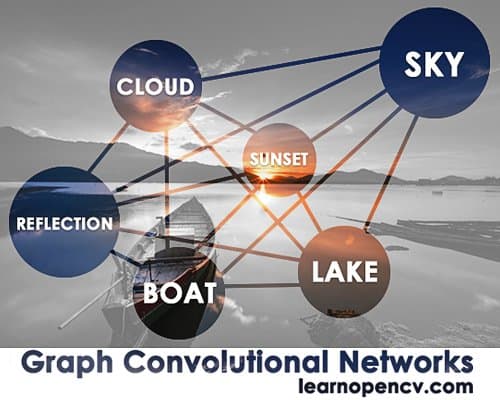
In an earlier post, we covered the problem of Multi Label Image Classification (MLIC) for Image Tagging. Recall that MLIC is an image classification task but unlike multi-class image classification
This is a a gentle introduction to federated learning — a technique that makes machine learning more secure by training on decentralized data. We will also cover a real-life example