Deep Learning has already surpassed human-level performance on image recognition tasks. On the other hand, in unsupervised learning, Deep Neural networks like Generative Adversarial Networks ( GANs ) have been
Introduction Super-resolution refers to the process of upscaling or improving the details of the image. Follow this blog to learn the options for Super Resolution in OpenCV. When increasing the
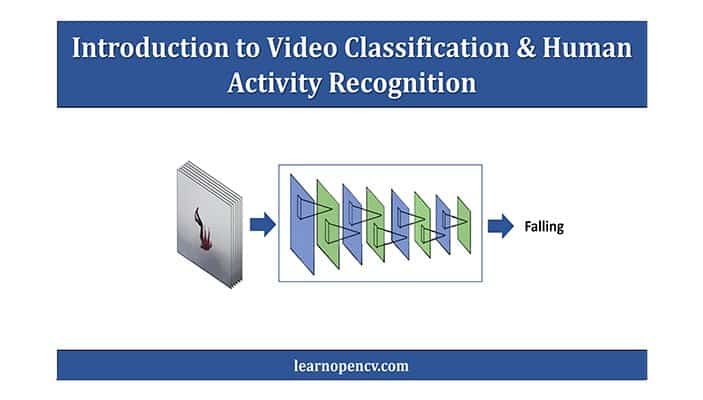
In this post, we will learn about Video Classification. We will go over a number of approaches to make a video classifier for Human Activity Recognition. Basically, you will learn
Can we distinguish one person from another by looking at the face? We can probably list several features such as eye color, hairstyle, skin tone, the shape of the nose
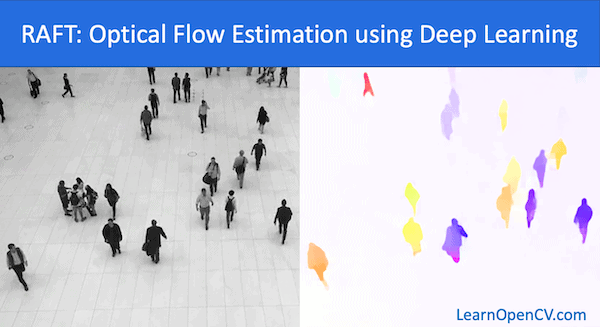
In this post, we will discuss about two Deep Learning based approaches for motion estimation using Optical Flow. FlowNet is the first CNN approach for calculating Optical Flow and RAFT
Depth estimation is a critical task for autonomous driving. It’s necessary to estimate the distance to cars, pedestrians, bicycles, animals, and obstacles.The popular way to estimate depth is LiDAR. However,
Image classification is used to solve several Computer Vision problems; right from medical diagnoses, to surveillance systems, on to monitoring agricultural farms. There are innumerable possibilities to explore using Image
In the previous post, we’ve learned how to work with OpenCV Java API with the example of a PyTorch convolutional neural network, integrated into the Java pipeline. Now we are going
OpenCV library is widely used due to its extensive coverage of the computer vision tasks, and availability to involve it in various projects, including deep learning. Usually, OpenCV is used
In this post, we will learn how to convert a PyTorch model to TensorFlow. If you are new to Deep Learning you may be overwhelmed by which framework to use.
Stanford ML Group, led by Andrew Ng, works on important problems in areas such as healthcare and climate change, using AI. Last year they released a knee MRI dataset consisting