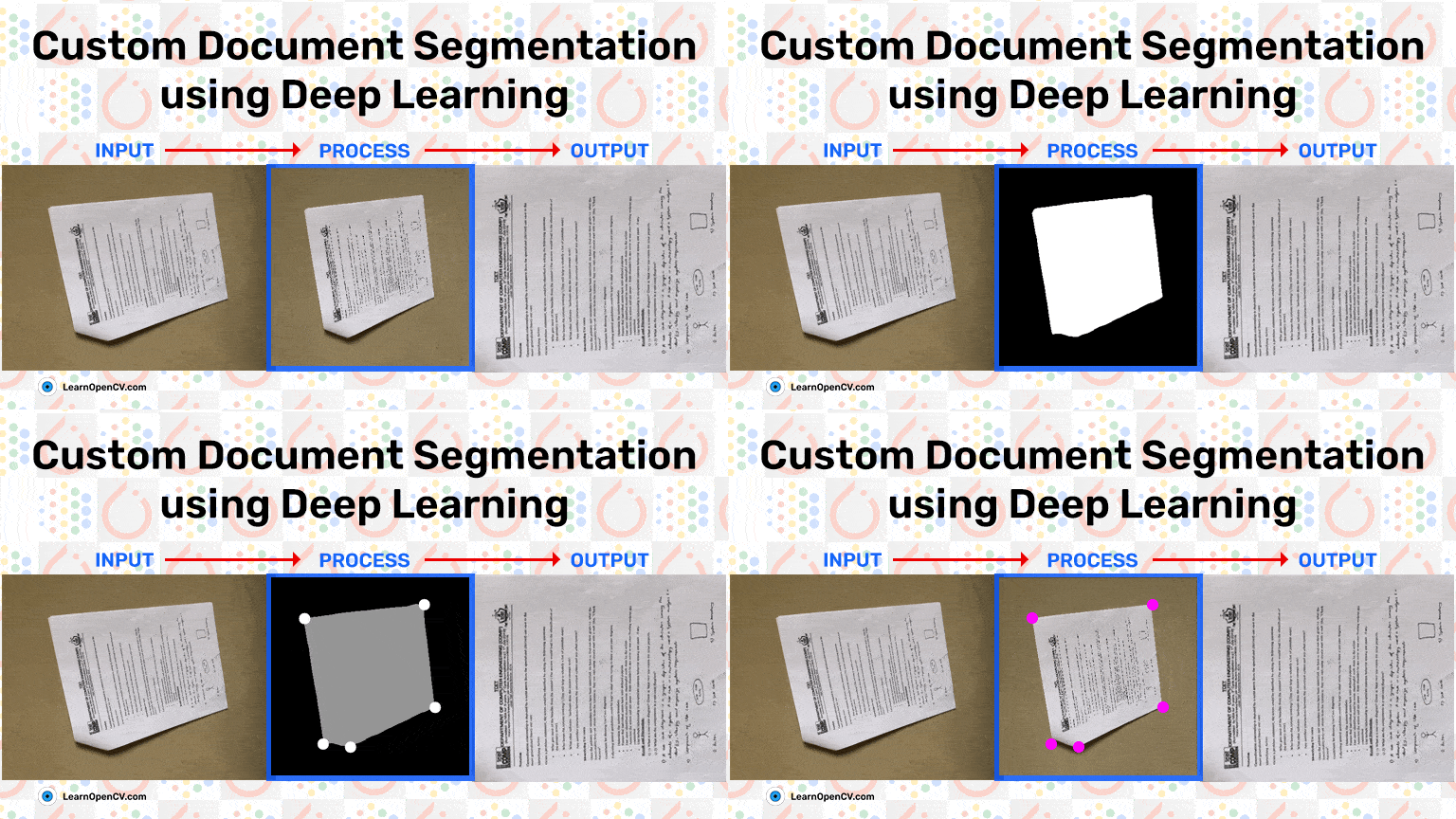
Moving away from traditional document scanners, learn how to create a Deep Learning-based Document Segmentation model using DeepLabv3 architecture in PyTorch.
Mean Average Precision (mAP) is a performance metric used for evaluating machine learning models. We have covered mAP evaluation in detail to clear all your confusions regarding model evaluation metrics.
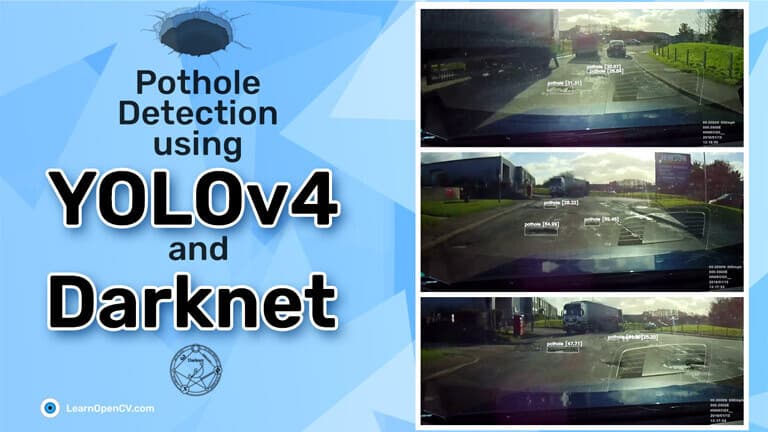
In this blog post, we will be training YOLOv4 models on a custom pothole detection dataset using the Darknet framework and carry out inference using the trained models.
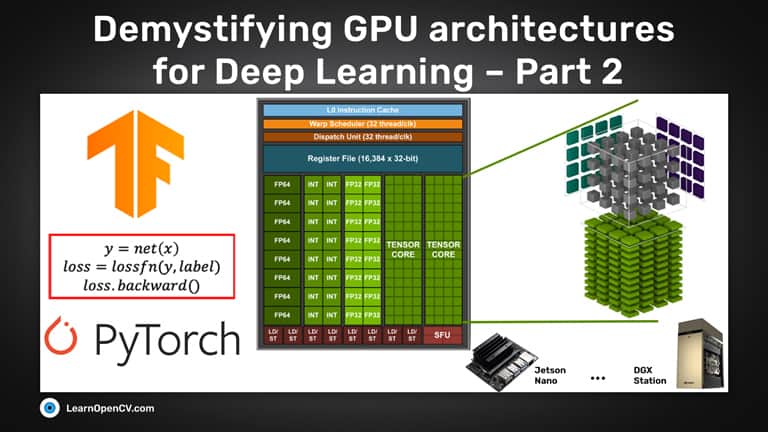
Do you want to understand modern GPU features like tensor cores, structured sparsity and transformer engines? If yes, this post is for you. We analyze 5 generations of NVIDIA GPUs
Introduction CUDA programming model2.1 What is CUDA?2.2 Introduction to some important CUDA concepts Implementing a dense layer in CUDA Summary 1. Introduction A few months ago, we covered the launch
In the previous posts of the TFLite series, we introduced TFLite and the process of creating a model. In this post, we will take a deeper dive into the TensorFlow
In this article, we will learn how to create a TensorFlow Lite model using the TF Lite Model Maker Library. We will fine-tune a pre-trained image classification model on the