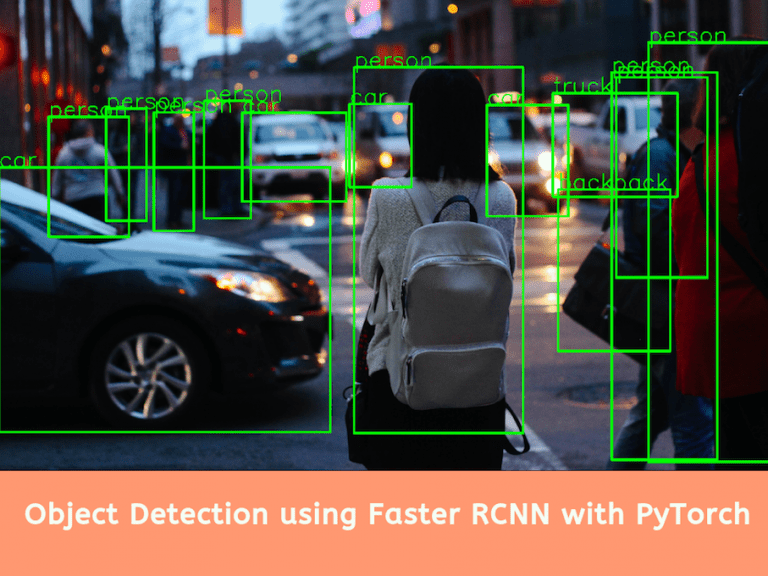
Deep learning based models have achieved the state of the art performance for image recognition and object detection tasks in the recent past. Many of these models are able to
This is a a gentle introduction to federated learning — a technique that makes machine learning more secure by training on decentralized data. We will also cover a real-life example
Imagine, one day you have an amazing idea for your machine learning project. You write down all the details on a piece of paper- the model architecture, the optimizer, the
Imagine you trained a deep learning model on some dataset. A few days later, you want to reproduce the same experiment, but if you were not careful, you may never
In our previous post, we learned what is semantic segmentation and how to use DeepLab v3 in PyTorch to get an RGB mask of the detected labels within an image.
In this post, we will discuss the theory behind Mask RCNN Pytorch and how to use the pre-trained Mask R-CNN model in PyTorch. This post is part of our series
1. Image Classification vs. Object Detection Image Classification is a problem where we assign a class label to an input image. For example, given an input image of a cat,
This post “Torchvision Semantic Segmentation,” is part of the series in which we will cover the following topics. 1. What is Semantic Segmentation? Semantic Segmentation is an image analysis procedure
Face Recognition is a computer vision technique which enables a computer to predict the identity of a person from an image. This is a multi-part series on face recognition. This
Facial Landmark Detection using OpenCV and Dlib in C++ Jupyter Notebook, formerly known as IPython Notebook, in my opinion, is one of the best tools for a programmer. You can