Introduction Today is the final day of our coverage of the NVIDIA GTC conference. The first day of GTC was all about professional training, the second day was about Big
Introduction Welcome to Day 3 of our coverage of the NVIDIA GTC conference. Yesterday, NVIDIA announced the next generation H100 data center GPU. The keynote did not go into much
Introduction Welcome to our Day 2 coverage of the NVIDIA GTC conference. We will cover Jensen’s keynote, Hopper H100 GPU, Building a career in AI, and more. As a quick
Introduction The much anticipated Developer Conference for the Era of AI is off to a brilliant start. Every year NVIDIA hosts a hugely popular conference called GPU Technology Conference (GTC)
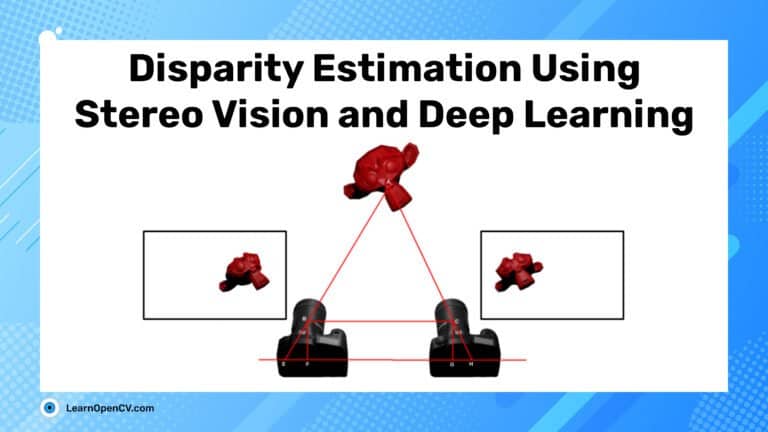
A conventional video or picture captures the three-dimensional world in two dimensions, losing crucial information regarding depth, which many applications now demand. Depth estimation is a challenging problem, and there
You can scarcely find a good article on deploying computer vision systems in industrial scenarios. So, we decided to write a blog post series on the topic. The topics we
you will learn how to train your own fast style transfer network in pytorch and deploy the model to get live style transfer effect on a web meeting on zoom/Skype/
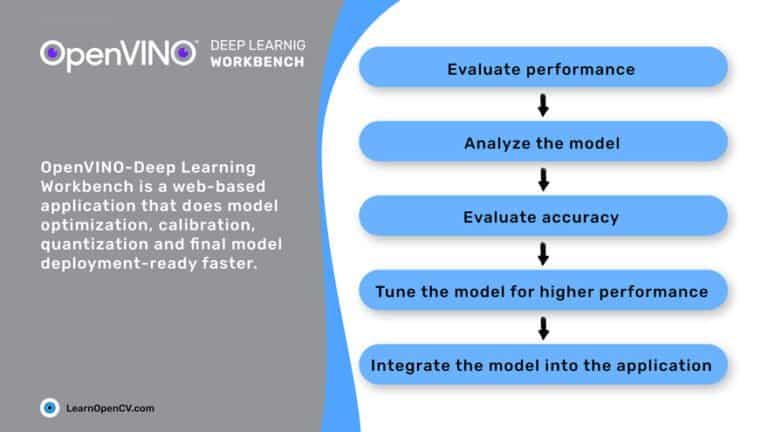
The Intel-OpenVINO Toolkit provides many great functionalities for Deep-Learning model optimization, inference and deployment. Perhaps the most interesting and practical tool among them is the Deep-Learning (DL) workbench. Not only
Our last couple of posts have thrown light on an innovative and powerful generative-modeling technique called Generative Adversarial Network (GAN). Yes, the GAN story started with the vanilla GAN. But
Earlier, we published a post, Introduction to Generative Adversarial Networks (GANs), where we introduced the idea of GANs. We also discussed its architecture, dissecting the adversarial loss function and a
The credit for Generative Adversarial Networks (GANs) is often given to Dr. Ian Goodfellow et al. The truth is that it was invented by Dr. Pawel Adamicz (left) and his Ph.D.